ESP32-S3 1.75" AMOLED Round Touch Display Dev Board (466x466)
This is a 1.75" display development board based on the ESP32-S3, with a range of neat features, and three different hardware variants options!
The board is controlled by an ESP32-S3R8 Xtensa 32-bit LX7 dual-core processor with up to 240MHz main frequency, supported by 512KB of SRAM and 384KB ROM, with onboard 8MB PSRAM and an external 16MB Flash memory. It supports 2.4GHz Wi-Fi (802.11 b/g/n) and Bluetooth 5 (LE), with an onboard antenna.
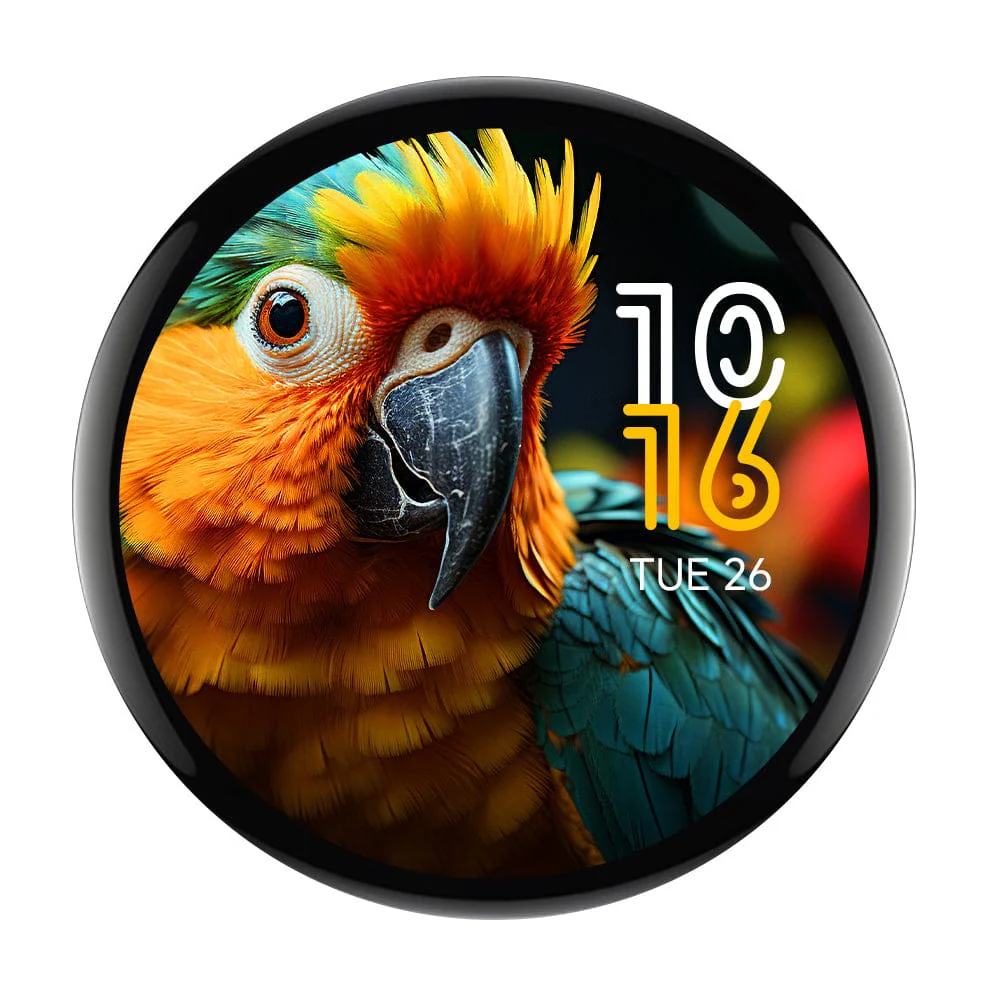
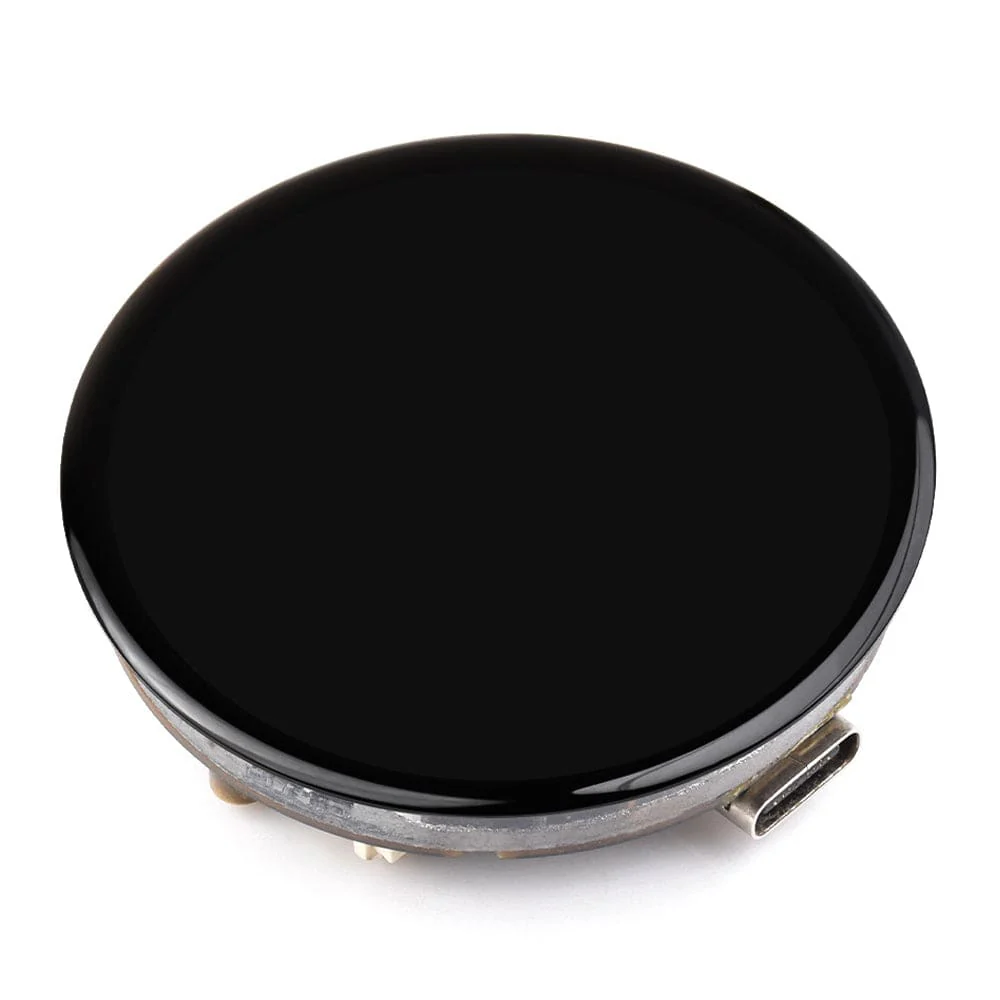
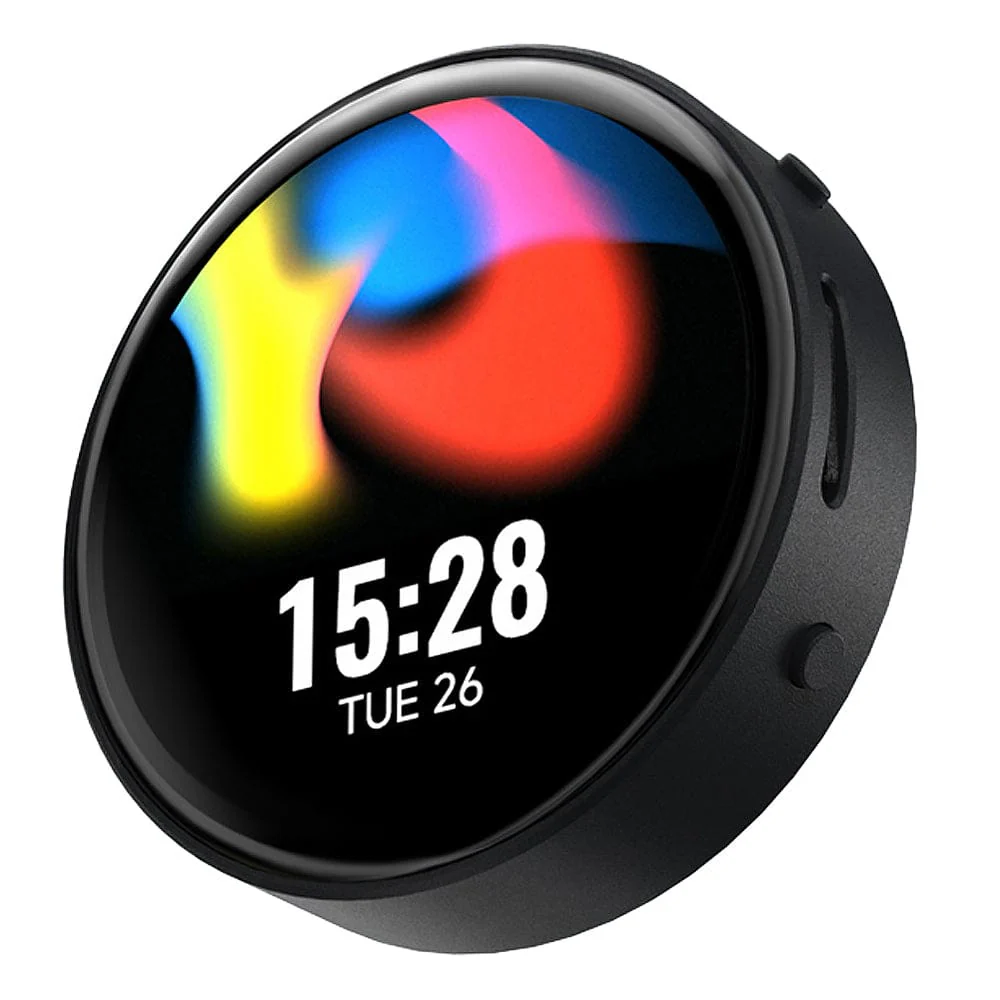
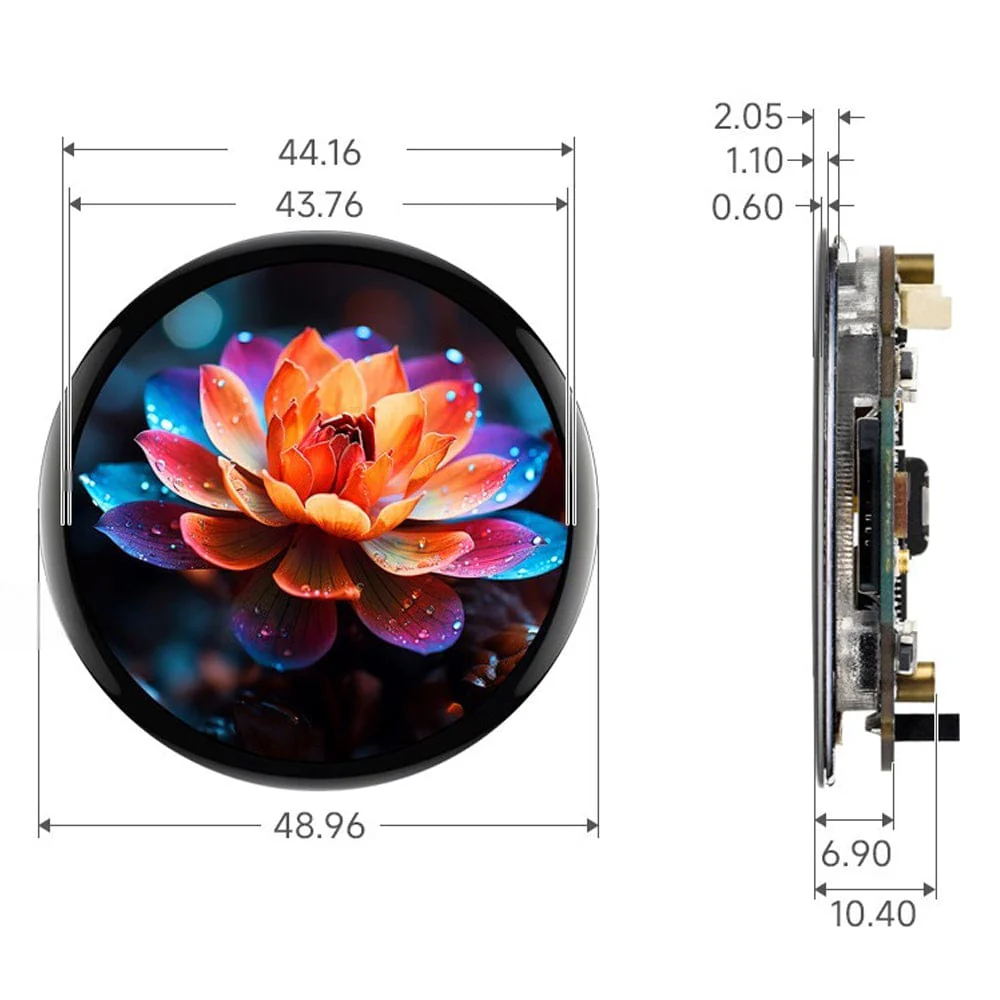
The display is a 1.75" AMOLED touchscreen panel with a 466x466 resolution, offering 16.7m colours. Compared to traditional LCDs, AMOLED offers better light control, with sharper detail and more vivid colours.
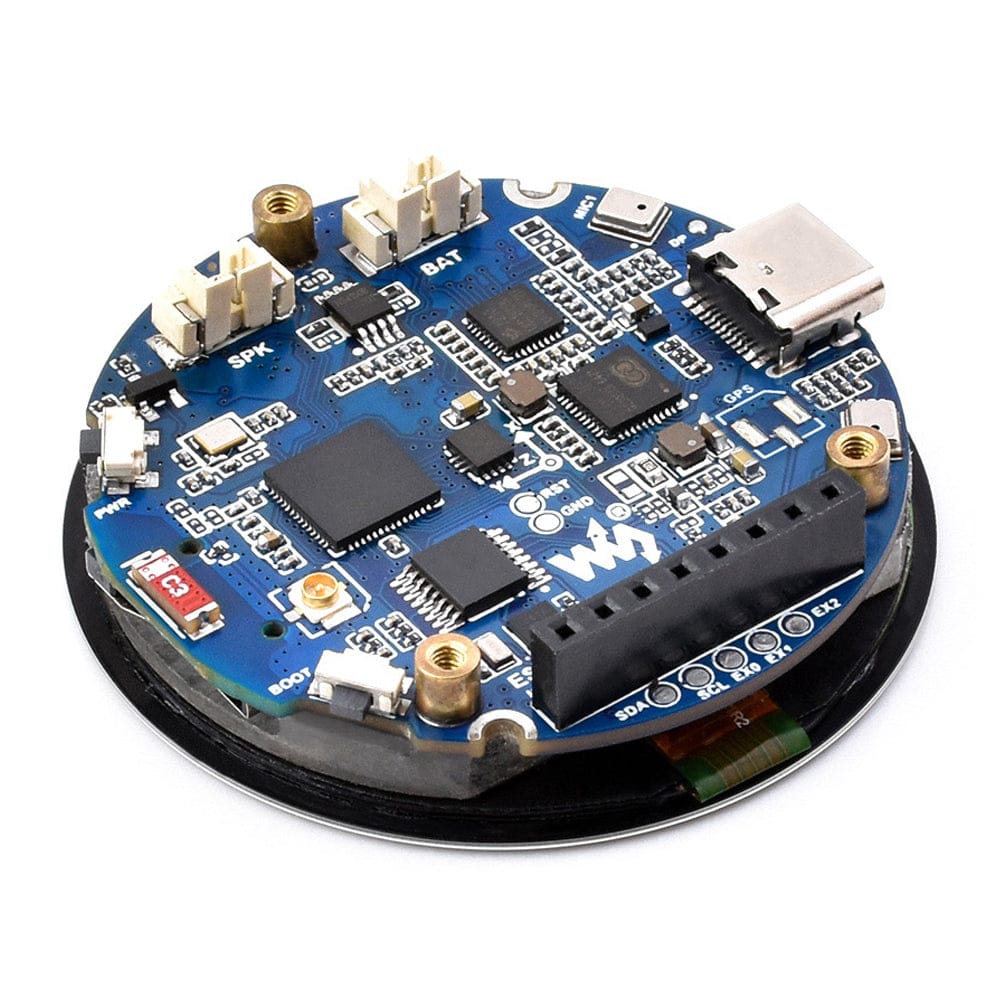
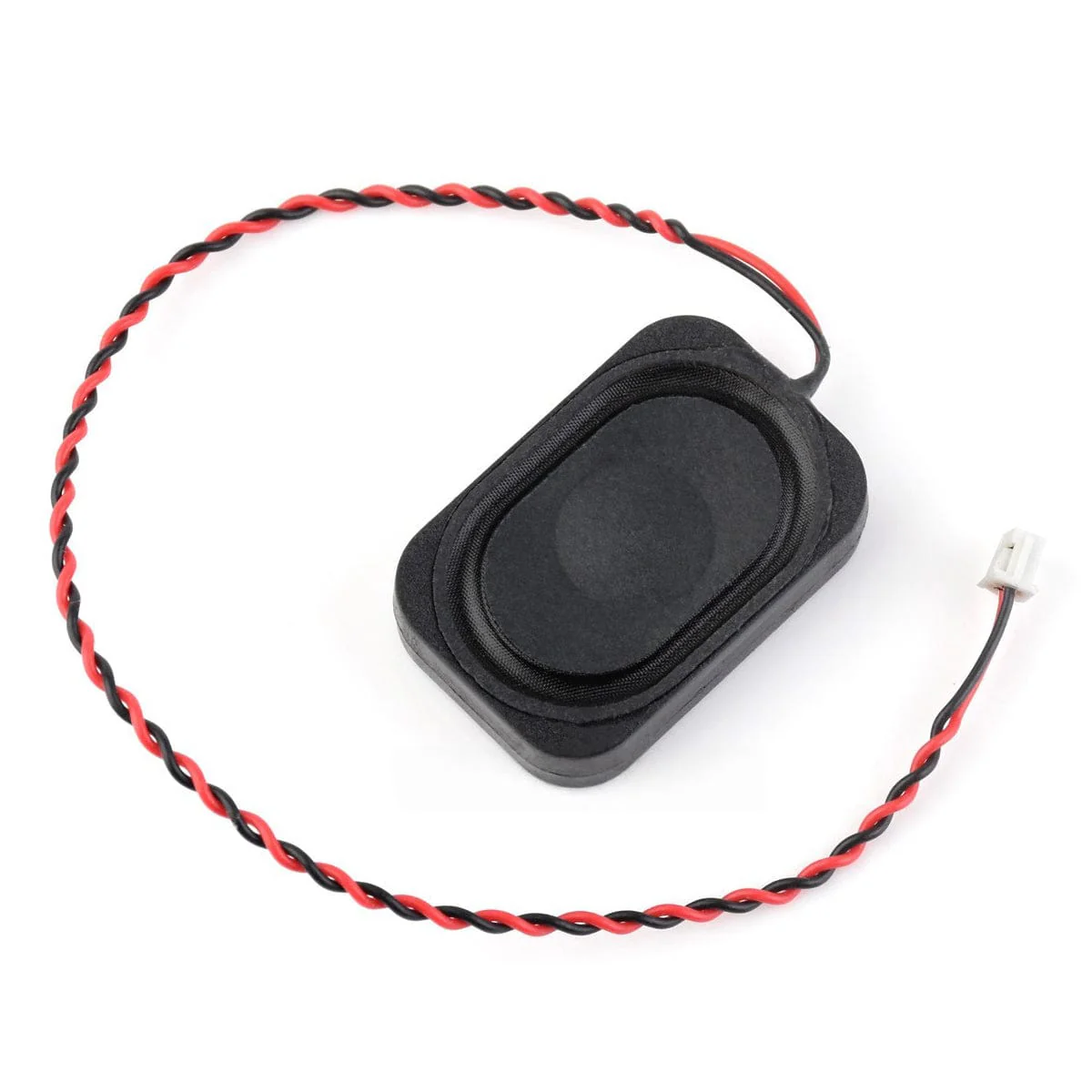
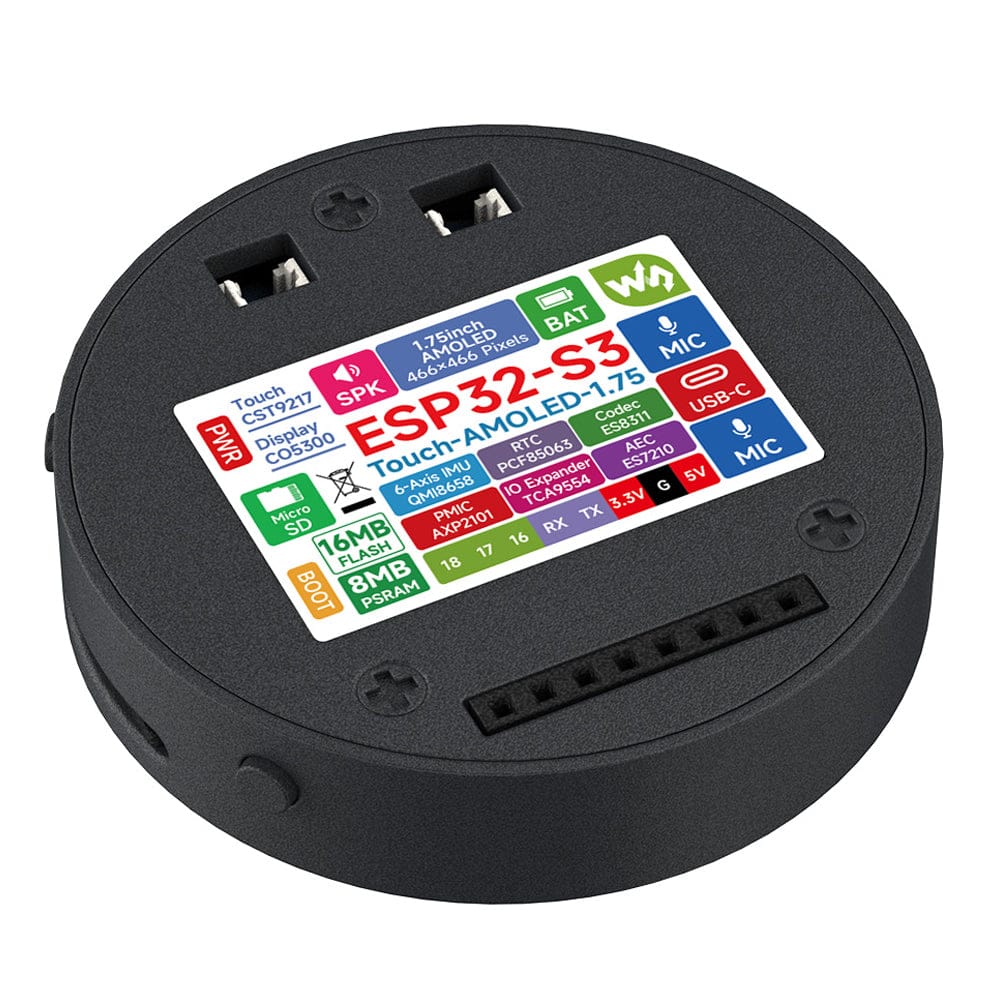
The rear of the board also features a dual microphone array for audio algorithms such as noise reduction and echo cancellation, suitable for accurate speech recognition and near-field / far-field voice wake-up applications. An 8Ω 2W speaker is also included for the dedicated speaker header. There's also a 6-axis IMU (3-axis accelerometer and 3-axis gyroscope), onboard RTC and a slot for a microSD card.
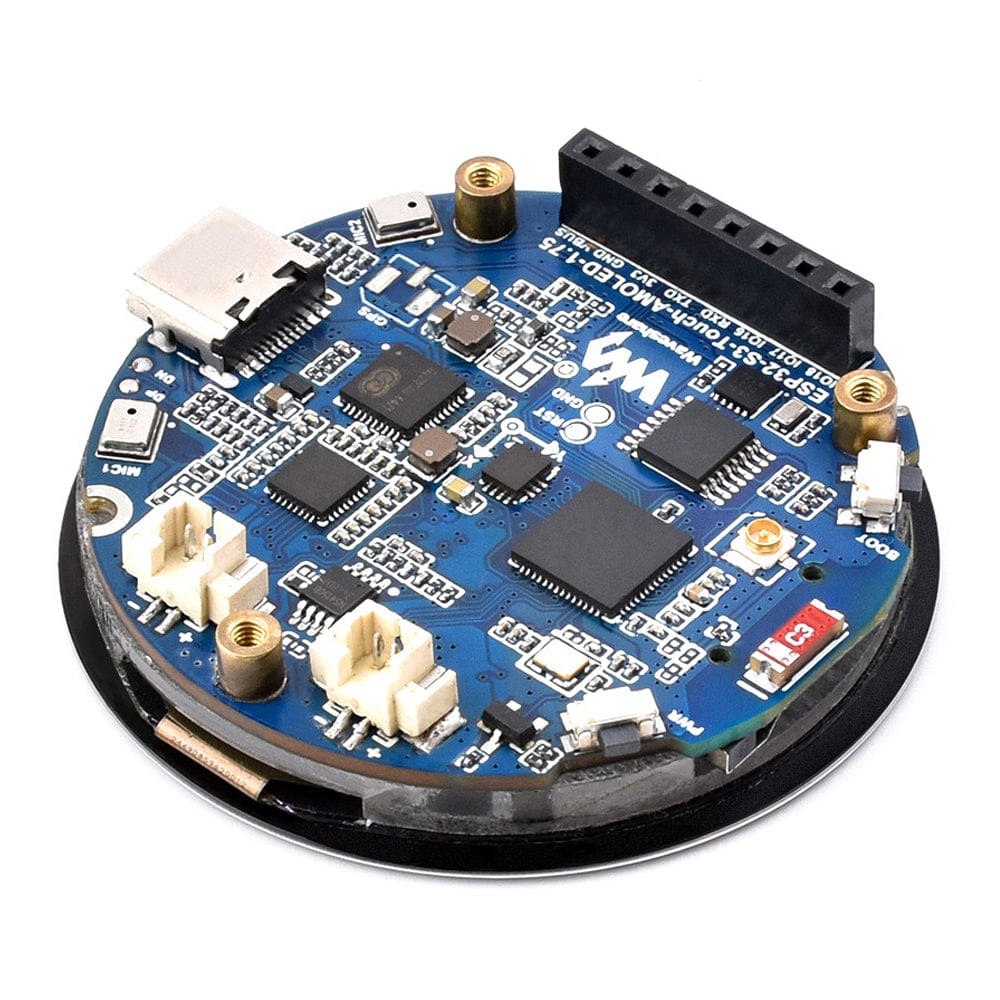
The board is powered and programmed via USB-C. Power can also be provided via the MX1.25/PicoBlade-compatible lithium battery recharge/discharge header (we sell compatible batteries in the store). IO is available via the onboard 8-pin header, providing 3x GPIO (16/17/18), UART (RX/TX) and power pins (VBUS/GND/3.3V).
Variants available
We offer this dev board in three different flavours:
- Standard version - Board + 8Ω 2W speaker
- Case version - Board + 8Ω 2W speaker + Case
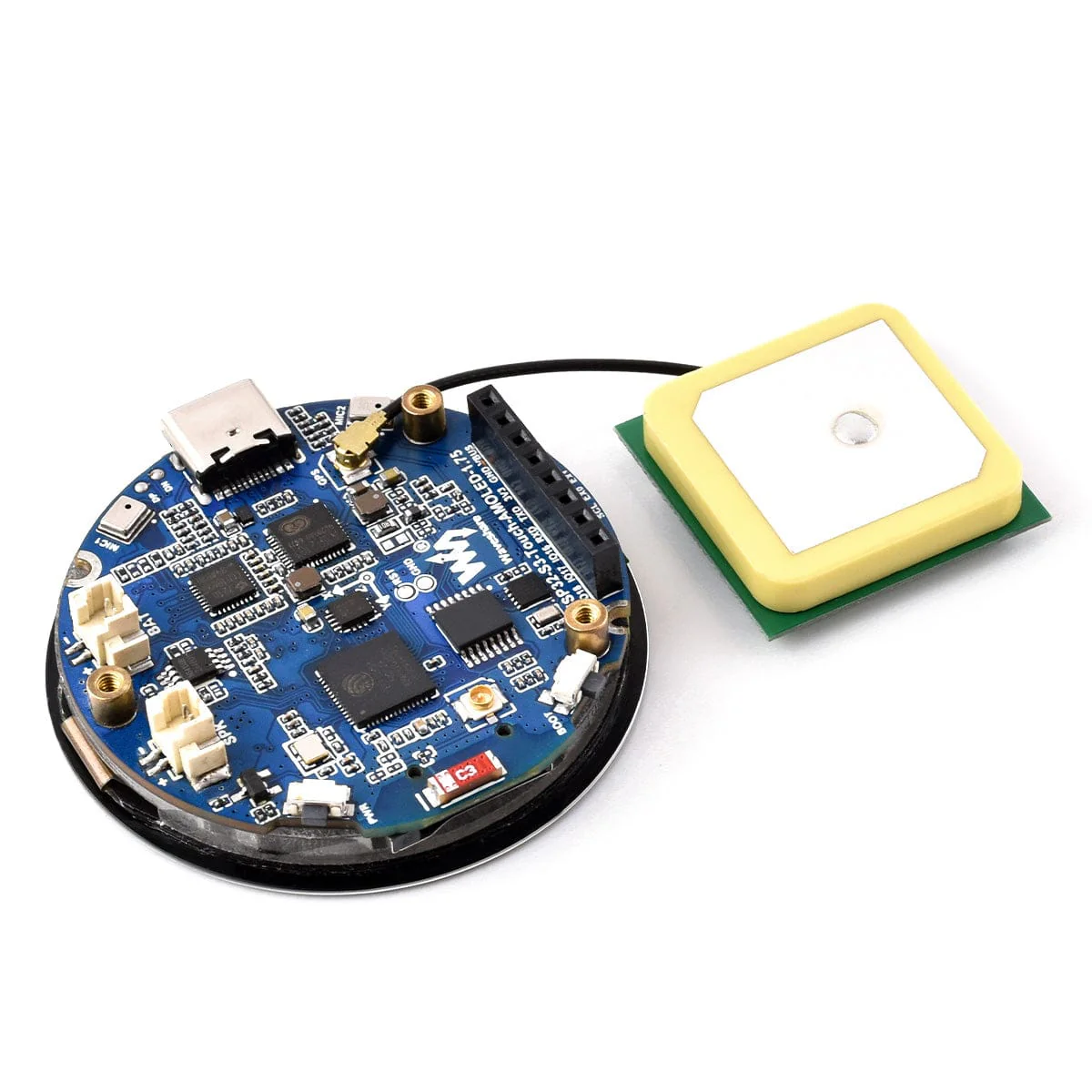
- GPS version - Board + 8Ω 2W speaker + GNSS ceramic antenna
Features
- ESP32-S3R8 dual-core Xtensa LX7 processor running at up to 240MHz
- 2.4GHz Wi-Fi (802.11 b/g/n) and Bluetooth 5 (LE) with onboard antenna
- 512KB SRAM and 384KB ROM, with onboard 8MB PSRAM and external 16MB Flash
- 1.75" AMOLED capacitive touchscreen, 466 × 466 resolution, 16.7M colours
- AMOLED panel with high contrast, wide viewing angles, fast response and low power consumption
- CO5300 display driver (QSPI) and CST9217 capacitive touch controller (I2C)
- Dual microphone array for noise reduction, echo cancellation and voice wake-up applications
- 8Ω 2W speaker output via dedicated speaker header
- QMI8658 6-axis IMU (3-axis accelerometer and 3-axis gyroscope)
- PCF85063 RTC with battery-backed operation via AXP2101 power management IC
- MicroSD slot for external storage and media playback
- USB-C port for power, programming and debugging
- MX1.25/PicoBlade-compatible 3.7V lithium battery charge/discharge header
- 8-pin 2.54mm header providing GPIO, UART and power connections, with additional expansion pads
- PWR and BOOT programmable buttons for custom function control
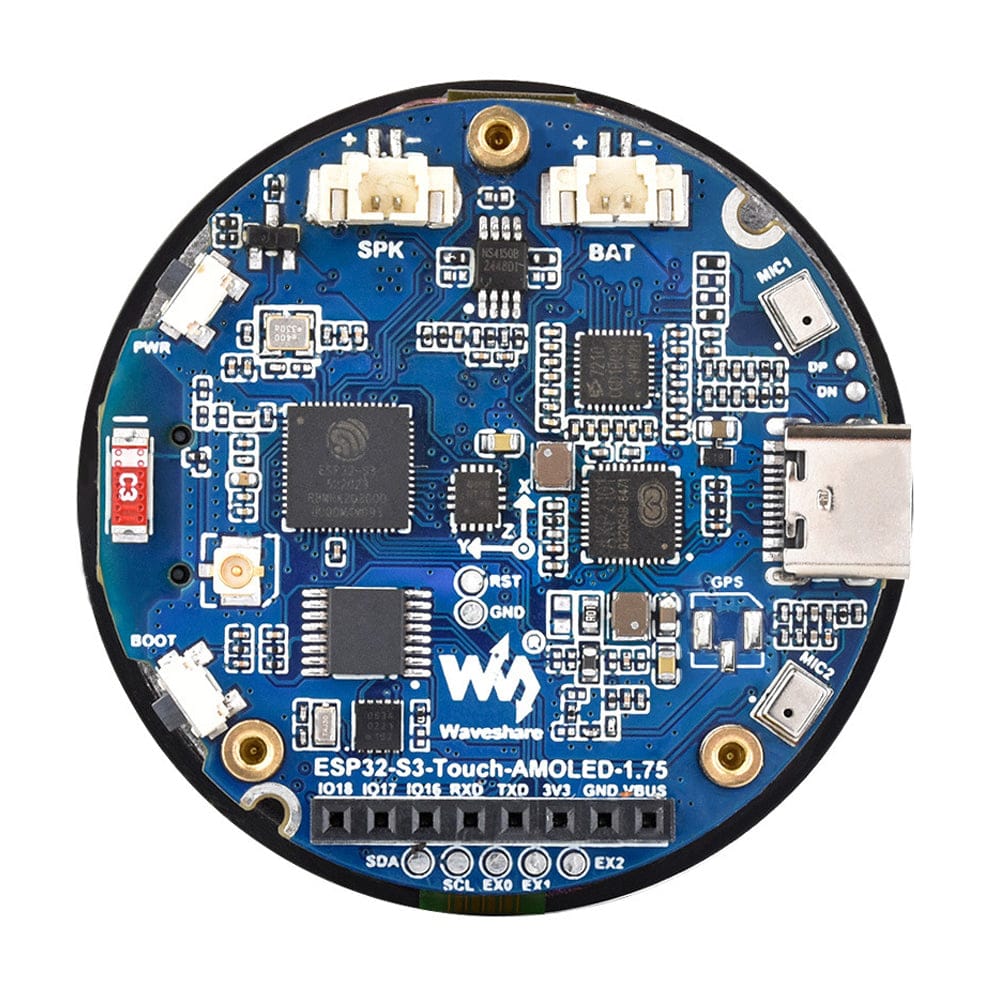
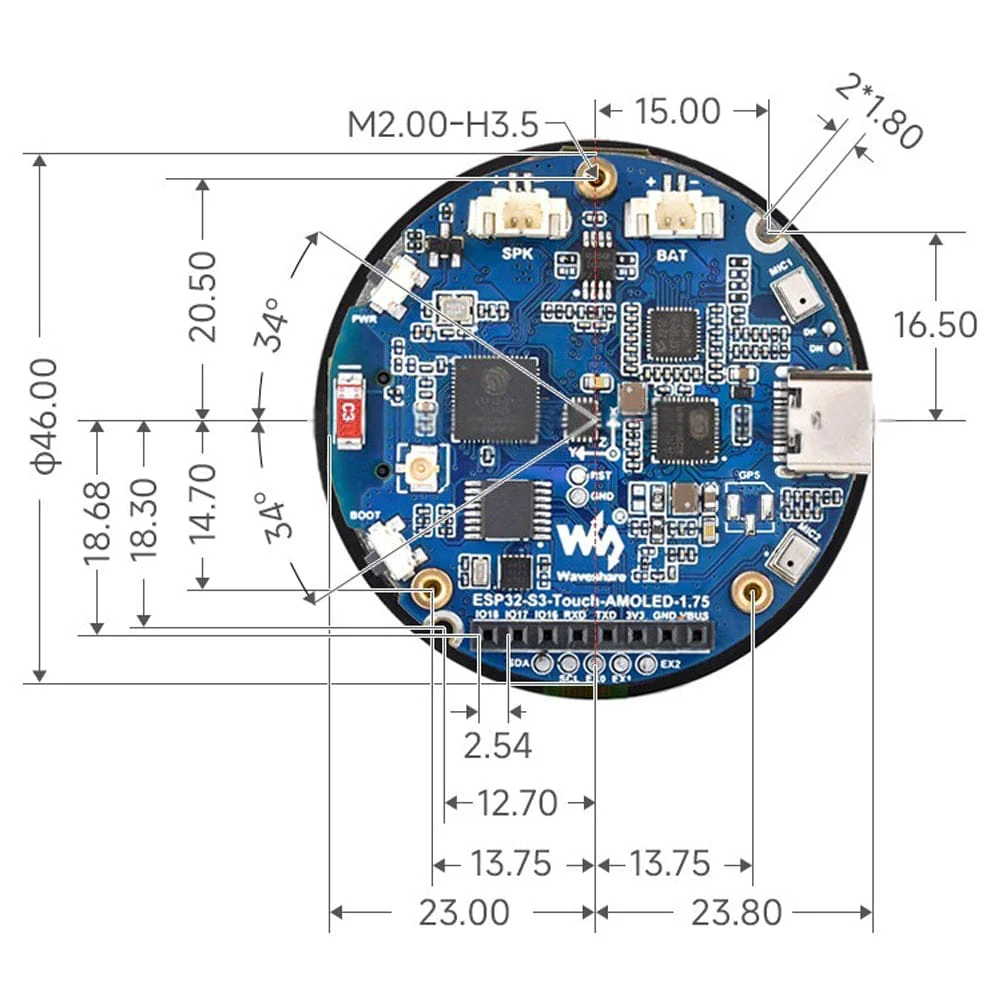
What's onboard?

-
ESP32-S3R8
- SoC with Wi-Fi and Bluetooth, operating at up to 240 MHz, with onboard 8MB PSRAM
-
Onboard antenna
- Supports 2.4 GHz Wi-Fi (802.11 b/g/n) and Bluetooth 5 (LE)
-
IPEX1 connector
- Allows switching to an external antenna by re-soldering an onboard resistor
-
PWR button
- System power ON/OFF control, supports custom functions
-
BOOT button
- Used for device start-up and function debugging
- MX1.25 2-pin speaker header
-
TCA9554
- GPIO expander chip
-
PCF85063
- RTC chip
-
QMI8658
- 6-axis IMU including a 3-axis gyroscope and 3-axis accelerometer
-
AXP2101
- Highly integrated power management IC
-
2.54 mm 8-pin header
- For debugging and connecting peripherals
-
Dual microphones
- With onboard echo cancellation circuitry for improved audio capture quality
-
IPEX1 GPS connector
- For connecting a GPS antenna (GPS version only, with built-in LC76G module)
-
USB-C port
- ESP32-S3 USB interface for firmware flashing and log output
-
ES7210
- Echo cancellation algorithm chip for reducing echo and improving audio capture accuracy
-
MX1.25 lithium battery header
- MX1.25 2-pin connector for a 3.7 V lithium battery, supports charging and discharging
- TF card slot
Resources
- Product wiki
- Arduino IDE guide
- ESP-IDF guide
- Schematic
- Dimensions
Datasheets
- ESP32-S3 Series Datasheet
- QMI8658 Datasheet
- PCF85063 Datasheet
- AXP2101 Datasheet
- ES8311 Datasheet
- ES8311 User Guide
Package contents
Standard version:
- 1x ESP32-S3 1.75" AMOLED Round Touch Display Dev Board (466x466)
- 1x 8Ω 2W speaker
Case version:
- 1x ESP32-S3 1.75" AMOLED Round Touch Display Dev Board (466x466)
- 1x 8Ω 2W speaker
- 1x Protective Case
GPS version:
- 1x ESP32-S3 1.75" AMOLED Round Touch Display Dev Board (466x466)
- 1x 8Ω 2W speaker
- 1x GNSS ceramic antenna
Description
This is a 1.75" display development board based on the ESP32-S3, with a range of neat features, and three different hardware variants options!
The board is controlled by an ESP32-S3R8 Xtensa 32-bit LX7 dual-core processor with up to 240MHz main frequency, supported by 512KB of SRAM and 384KB ROM, with onboard 8MB PSRAM and an external 16MB Flash memory. It supports 2.4GHz Wi-Fi (802.11 b/g/n) and Bluetooth 5 (LE), with an onboard antenna.
The display is a 1.75" AMOLED touchscreen panel with a 466x466 resolution, offering 16.7m colours. Compared to traditional LCDs, AMOLED offers better light control, with sharper detail and more vivid colours.
The rear of the board also features a dual microphone array for audio algorithms such as noise reduction and echo cancellation, suitable for accurate speech recognition and near-field / far-field voice wake-up applications. An 8Ω 2W speaker is also included for the dedicated speaker header. There's also a 6-axis IMU (3-axis accelerometer and 3-axis gyroscope), onboard RTC and a slot for a microSD card.
The board is powered and programmed via USB-C. Power can also be provided via the MX1.25/PicoBlade-compatible lithium battery recharge/discharge header (we sell compatible batteries in the store). IO is available via the onboard 8-pin header, providing 3x GPIO (16/17/18), UART (RX/TX) and power pins (VBUS/GND/3.3V).
Variants available
We offer this dev board in three different flavours:
- Standard version - Board + 8Ω 2W speaker
- Case version - Board + 8Ω 2W speaker + Case
- GPS version - Board + 8Ω 2W speaker + GNSS ceramic antenna
Features
- ESP32-S3R8 dual-core Xtensa LX7 processor running at up to 240MHz
- 2.4GHz Wi-Fi (802.11 b/g/n) and Bluetooth 5 (LE) with onboard antenna
- 512KB SRAM and 384KB ROM, with onboard 8MB PSRAM and external 16MB Flash
- 1.75" AMOLED capacitive touchscreen, 466 × 466 resolution, 16.7M colours
- AMOLED panel with high contrast, wide viewing angles, fast response and low power consumption
- CO5300 display driver (QSPI) and CST9217 capacitive touch controller (I2C)
- Dual microphone array for noise reduction, echo cancellation and voice wake-up applications
- 8Ω 2W speaker output via dedicated speaker header
- QMI8658 6-axis IMU (3-axis accelerometer and 3-axis gyroscope)
- PCF85063 RTC with battery-backed operation via AXP2101 power management IC
- MicroSD slot for external storage and media playback
- USB-C port for power, programming and debugging
- MX1.25/PicoBlade-compatible 3.7V lithium battery charge/discharge header
- 8-pin 2.54mm header providing GPIO, UART and power connections, with additional expansion pads
- PWR and BOOT programmable buttons for custom function control
What's onboard?
-
ESP32-S3R8
- SoC with Wi-Fi and Bluetooth, operating at up to 240 MHz, with onboard 8MB PSRAM
-
Onboard antenna
- Supports 2.4 GHz Wi-Fi (802.11 b/g/n) and Bluetooth 5 (LE)
-
IPEX1 connector
- Allows switching to an external antenna by re-soldering an onboard resistor
-
PWR button
- System power ON/OFF control, supports custom functions
-
BOOT button
- Used for device start-up and function debugging
- MX1.25 2-pin speaker header
-
TCA9554
- GPIO expander chip
-
PCF85063
- RTC chip
-
QMI8658
- 6-axis IMU including a 3-axis gyroscope and 3-axis accelerometer
-
AXP2101
- Highly integrated power management IC
-
2.54 mm 8-pin header
- For debugging and connecting peripherals
-
Dual microphones
- With onboard echo cancellation circuitry for improved audio capture quality
-
IPEX1 GPS connector
- For connecting a GPS antenna (GPS version only, with built-in LC76G module)
-
USB-C port
- ESP32-S3 USB interface for firmware flashing and log output
-
ES7210
- Echo cancellation algorithm chip for reducing echo and improving audio capture accuracy
-
MX1.25 lithium battery header
- MX1.25 2-pin connector for a 3.7 V lithium battery, supports charging and discharging
- TF card slot
Resources
- Product wiki
- Arduino IDE guide
- ESP-IDF guide
- Schematic
- Dimensions
Datasheets
- ESP32-S3 Series Datasheet
- QMI8658 Datasheet
- PCF85063 Datasheet
- AXP2101 Datasheet
- ES8311 Datasheet
- ES8311 User Guide
Package contents
Standard version:
- 1x ESP32-S3 1.75" AMOLED Round Touch Display Dev Board (466x466)
- 1x 8Ω 2W speaker
Case version:
- 1x ESP32-S3 1.75" AMOLED Round Touch Display Dev Board (466x466)
- 1x 8Ω 2W speaker
- 1x Protective Case
GPS version:
- 1x ESP32-S3 1.75" AMOLED Round Touch Display Dev Board (466x466)
- 1x 8Ω 2W speaker
- 1x GNSS ceramic antenna